No Piles Left Behind During Fire Season
Brush Removal in Fresno for dried vegetation and fire fuel load on foothill-adjacent and rural properties
Dried brush piles left on foothill properties during the Central Valley's long dry season create direct fire hazard and violate defensible space requirements in many rural areas. Kims Junk Removal and Skidsteer Services removes accumulated brush from residential and rural parcels near Sanger and along the Sierra Nevada foothills, loading and hauling material in the same visit so no piles remain on-site to re-dry or re-ignite. Properties bordering open range or wildland interface zones accumulate brush fast, and manual removal crews often stack material on-site for later pickup, which leaves a secondary fire risk during peak wildfire season.
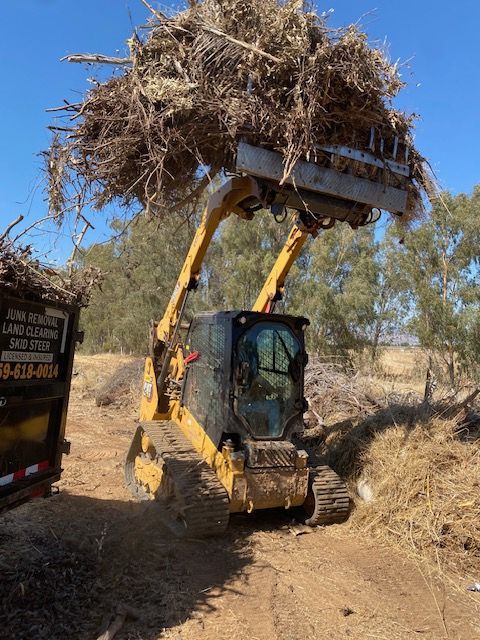
Skid steer loading handles bulk brush volume faster than hand crews and eliminates the need for tarps, staging areas, or follow-up haul trips. The full-haul approach means brush is cleared and removed in one mobilization, which reduces cost and eliminates the delay between cutting and final removal.
Arrange a site evaluation to assess brush volume and access conditions for removal equipment.
What Proper Brush Removal Requires
Effective brush removal clears dried vegetation down to bare soil and removes all material from the property, not just the visible surface layer. Skid steer equipment loads heavy, compacted brush piles that manual crews struggle to lift or transport, and the bucket capacity allows full loads without multiple trips to the truck.
You'll notice cleared ground with no brush piles, no scattered debris, and no dried material that could ignite during fire season. The property is visibly cleaner and compliant with local fire safety expectations, and there are no follow-up visits required to finish hauling what was stacked during initial clearing.
Brush removal does not include tree trimming or stump grinding, but it does handle all surface vegetation, dried grasses, and accumulated debris that contribute to fire fuel load. The service is designed for properties that need full clearance, not selective thinning or aesthetic pruning.
Answers to Frequent Service Questions
Property owners in foothill areas near Fresno and Sanger often ask about timing, fire season compliance, and what happens to the brush after removal. Here's what you need to know.
What happens to the brush after it's removed?
All brush is loaded into the skid steer bucket and hauled off-site during the same visit, so there are no piles left on your property to dry out or become a fire hazard during peak season.
How does skid steer loading compare to manual crews?
The skid steer bucket holds significantly more volume per load than manual crews can carry, and it handles compacted or heavy brush piles that would require multiple workers to move by hand.
When should brush removal happen in the Central Valley?
Brush removal is most critical before fire season intensifies in late spring and summer, but dried brush can accumulate year-round and should be cleared as soon as it becomes a visible fuel load.
Why does dried brush become a fire hazard so quickly?
The Central Valley's extended dry season reduces moisture content in vegetation rapidly, and dried brush ignites easily from embers, sparks, or direct flame contact during wildfire events.
What areas are cleared during brush removal?
Brush removal targets all visible dried vegetation, surface debris, and accumulated plant material across the designated clearing area, and it includes loading and hauling all material in one trip.
Kims Junk Removal and Skidsteer Services clears and hauls brush in a single visit, so your property is compliant and cleared without waiting for secondary pickup. Request a removal estimate based on your property's current brush load and location.